
Why Natural Stone Wall Cladding Can Transform Modern Building Exteriors
There is nothing subtle about the appearance of the exterior of a building. The facade communicates something long before the lobby, the reception area, or any other interior design choices make their presence felt. It is communicating something about the building, about the organization that occupies it, and about the intentions of the designer or owner.
Most surfaces are effective enough at doing this. Some surfaces excel at doing this. Stone surfaces do something in particular that no other material can match. It is not that stone is better in all respects technically, but that it has a certain weight that no artificial materials can emulate. Granite cladding is permanent. Marble cladding is considered. This does not take any particular knowledge of materials to understand.
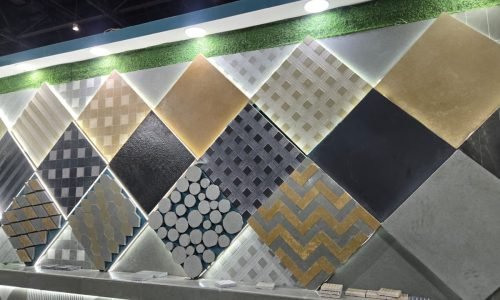
What Stone Wall Cladding Actually Involves
Cladding is the application of a surface material to a wall structure. The cladding is not structural. It is the architectural skin that determines how the building looks, how it weathers, and how it ages.
Natural stone cladding uses processed stone, marble, granite, limestone, sandstone, or other varieties, fixed to the substrate through an appropriate system. The cladding can be applied to exterior facades, entrance areas, feature walls, boundary treatments, and selected interior surfaces where an architectural statement is the design intent.
The variation inherent in natural stone is part of what makes it work architecturally. A facade of uniform manufactured panels looks uniform. A facade of natural granite or marble has depth, slight colour variation, textural character. It looks like something rather than like a surface applied to cover something.
Where Wall Cladding Stone Gets Used
Wall Cladding Stone is widely used in both residential and commercial environments because of its versatility and premium appearance.
Hotel Lobbies
Restaurant Interiors
Building Exteriors
Garden Walls
Villa Facades
Office Workstations
Reception Areas
Office Feature Walls
Luxury Apartments
Commercial Facades
Entrance Features
It’s durable, it doesn’t need constant upkeep, and that combination is exactly why it keeps landing on the specs for projects built to last.
Choosing the Right Stone for the Application
Not every stone suits every cladding application. This is where the decision-making gets specific and where working with an experienced Wall Cladding Stone Supplier Hyderabad who understands the material range becomes genuinely valuable. Granite is the right choice for those areas where hardness and durability to weathering play the most significant role. For instance, entrances that receive high foot traffic, exteriors in extreme climates, and places that will be constantly touched and leaned against – granite does all of that without being affected by wear and tear like some softer stones are.
The color palette of granite is more limited compared to that of marble, yet it features black and green stones that can form powerful architectural elements. Marbles are a slightly different case – they require more careful consideration when it comes to the usage outdoors. They are softer and more sensitive to acid rains and atmospheric pollution than granite, thus making them age differently in specific urban conditions. Yet, in some protected areas, in parts of facades, as well as in interior accent walls, marble creates something that cannot be done with granite.
A reliable Marble and Granite Supplier India who understands both materials can help project teams make this distinction rather than treating all natural stone as interchangeable.
Why Choose MD Granite?
Reputation in this industry gets built slowly, order by order, and that’s exactly how we’ve earned ours. Between our manufacturing setup, an experienced team, and an approach that actually keeps the customer’s needs front and centre, we’re able to deliver marble solutions for projects of pretty much any size.
We offer custom sizing, multiple finish options, competitive pricing, secure packaging, and delivery that shows up when it’s supposed to — whether you’re renovating a single home or supplying a large commercial build.
Our Advantages
- Elegant Natural Black Finish
- Exceptional Durability
- Heat & Scratch Resistant
- Low Water Absorption
- Easy Maintenance
- Long Service Life
- Suitable for Indoor & Outdoor Applications
- Available in Multiple Sizes & Finishes
Consistency Across Large Projects
A small residential feature wall is relatively forgiving. A thirty-metre hotel facade or the full exterior of a corporate headquarters building is not. Natural stone varies between quarry blocks and between batches. For large cladding projects, the material reserved at the beginning of the project and the material delivered in the final phase need to be consistent enough that no section of the completed facade reads as obviously different from the rest.
Managing this requires a supplier with genuine stock management capability and honest communication about batch variation. For significant projects, reserving material from the same quarry block or closely managed batches is worth discussing explicitly at the procurement stage rather than discovering the issue when inconsistent material arrives on site.
Export Considerations for International Projects
India’s natural stone industry supplies facade and cladding projects across multiple international markets. The country’s quarrying range, processing capability, and pricing make it a significant source for projects in the Middle East, Europe, Southeast Asia, and beyond.
An experienced Natural Stone Exporter India who has handled large facade projects understands what happens to stone in international freight and has built packaging and logistics processes accordingly. Stone slabs are heavy, fragile along their edges, and vulnerable to surface damage if crated without adequate protection. An exporter whose packaging has been developed through actual experience rather than cost minimisation delivers material in significantly better condition than one who treats packaging as a secondary consideration.
Documentation, specification verification before shipment, and communication throughout the shipping process are the other dimensions of export capability that determine whether an international stone order is a straightforward procurement experience or a source of expensive problems.
Project Planning That Avoids Common Problems
The decisions made before stone is ordered have more impact on the outcome than the decisions made during installation. Stone variety, finish, dimensions, thickness, installation system, and quantity all need to be finalised before procurement rather than adjusted as the project progresses.
Sample inspection and ideally full slab inspection before committing to a large order allows the project team to understand the natural variation range of the selected material and plan how individual pieces will be arranged on the facade. Bookmatching, colour sequencing, and managing the transition between sections installed at different stages all become manageable with proper planning and impossible to resolve well without it.
Installation handled by qualified professionals who understand cladding systems, substrate preparation, fixing methods appropriate for the stone weight and size, and movement joint requirements is the final component. The best stone specified and sourced correctly but installed without appropriate expertise produces a result that does not reflect the material’s quality.
Frequently Asked Questions
The application of processed natural stone as an architectural surface on external facades, entrance areas, feature walls, and selected interior surfaces. The stone is fixed to the structural substrate and provides the visual and weathering skin of the building.
Granite for hardness and weather resistance in demanding exterior conditions. Marble for elevated visual character in protected locations and interior feature applications. Other stone varieties depending on the specific architectural requirement.
Product quality, consistency across batches, processing accuracy, stock management for large projects, packaging standards, communication, and experience with comparable projects.
Yes. Hotels, corporate offices, retail environments, and institutional buildings all specify natural stone cladding specifically for the architectural presence and permanence it creates.
Stone variety, finish, dimensions, thickness, fixing system, quantity including appropriate wastage allowance, joint treatment, and movement joint requirements. These decisions made correctly before procurement prevent the expensive corrections that come from making them during or after installation.
Connect With MD Granite